Waterproof Surfaces That Handle Real Household Activity
Luxury vinyl plank and vinyl tile in Willis for kitchens, bathrooms, and basements where moisture creates flooring failures
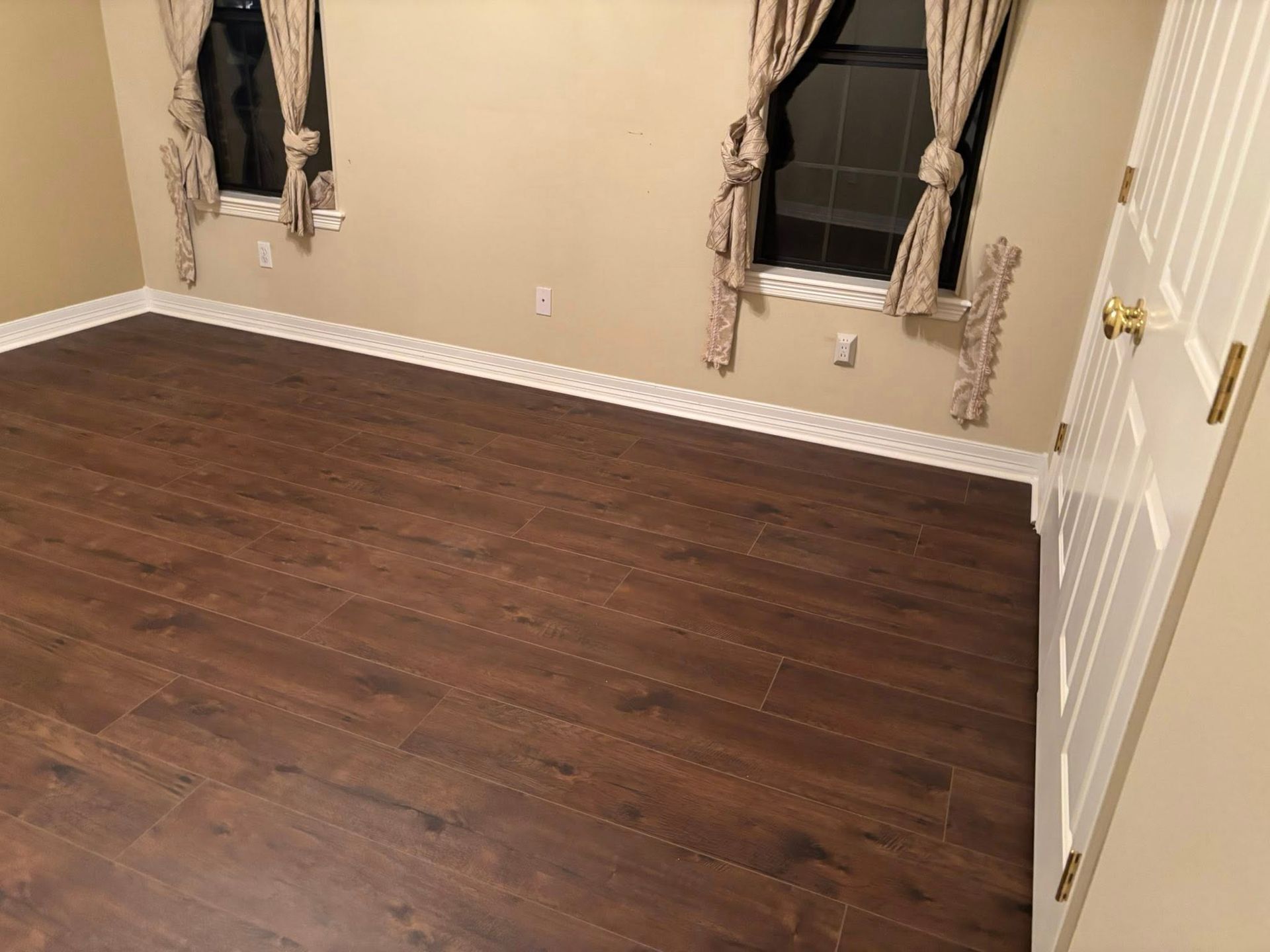
Water damage from spills, leaks, and humidity leaves traditional flooring warped and discolored, creating replacement cycles that drain time and money. Our waterproof vinyl options replicate hardwood and stone aesthetics while using composite cores that resist swelling, delamination, and mold growth even when submerged. Willis Flooring Pros installs luxury vinyl plank and tile in Willis through floating click-lock or glue-down methods, with selection based on substrate type and expected floor loading.
Floating systems use interlocking edges and foam underlayment to create installations that accommodate subfloor imperfections and allow easy plank replacement if damage occurs, while glue-down applications bond directly to concrete or existing tile for a thinner profile and greater stability under heavy furniture. You'll select from wear layers ranging from 12 mil for moderate traffic to 20 mil for commercial-grade durability, with thicker layers resisting scratches from pet claws and furniture dragging more effectively over time.
Arrange an on-site consultation to review subfloor conditions and discuss wear layer thickness based on your household activity levels.
What Proper Vinyl Installation Requires
Substrate preparation determines whether vinyl installations remain flat and secure, requiring removal of debris, filling of cracks, and leveling of high spots before any planks or tiles are positioned. Self-leveling compound addresses dips and slopes in concrete slabs, preventing the telegraphing of surface irregularities through the vinyl that creates visible waves and compromises locking mechanisms in floating floors.
After installation, you'll notice seams that align tightly without gaps, transitions between rooms that sit flush with adjacent flooring, and a surface that feels solid underfoot without the hollow sound that indicates poor substrate contact. The waterproof core prevents the buckling and edge-lifting common in laminate products when moisture infiltrates seams, maintaining appearance and integrity even in high-humidity environments.
Vinyl's low-maintenance surface requires only damp mopping without the refinishing, sealing, or waxing demanded by wood and stone, though abrasive cleaners and steam mops can degrade wear layers and dull finishes. Understanding these maintenance boundaries extends product life and preserves the factory finish that provides scratch and stain resistance.
Questions About Vinyl Flooring Performance
Material selection involves understanding how construction details affect long-term performance in specific environments, particularly where water exposure is frequent.
What makes luxury vinyl waterproof compared to laminate flooring?
Luxury vinyl uses a solid composite core—either wood-plastic composite (WPC) or stone-plastic composite (SPC)—that doesn't absorb water, while laminate relies on a fiberboard core that swells and delaminates when moisture penetrates seams or edges.
How does wear layer thickness affect durability in high-traffic areas?
Thicker wear layers—measured in mils—provide greater resistance to scratches, scuffs, and dent marks, with 12-mil layers suitable for bedrooms and 20-mil commercial-grade options necessary for kitchens and entryways that see constant foot traffic and furniture movement.
Why do some vinyl installations require glue-down instead of floating methods?
Glue-down applications prevent movement and noise in commercial settings or over perfectly smooth substrates, while floating systems accommodate minor subfloor imperfections and allow easier future removal, making method selection dependent on substrate quality and intended use.
What subfloor moisture levels prevent vinyl installation in Willis until remediation occurs?
Concrete slabs emitting moisture above manufacturer thresholds—typically 3-5 pounds per 1,000 square feet over 24 hours—require vapor barriers or moisture mitigation systems to prevent adhesive failure in glue-down installations and mold growth beneath floating floors.
How do texture variations in vinyl affect slip resistance and maintenance?
Embossed textures that replicate wood grain or stone surfaces provide better traction when wet compared to smooth finishes, though deeper textures trap dirt in grooves and require more frequent cleaning to maintain appearance in entryways and mudrooms.
Willis Flooring Pros delivers vinyl installations that address moisture challenges common in Texas homes, with product selection tailored to each room's exposure and use patterns. Contact us to discuss waterproof options that eliminate the maintenance and failure patterns associated with traditional flooring materials.