
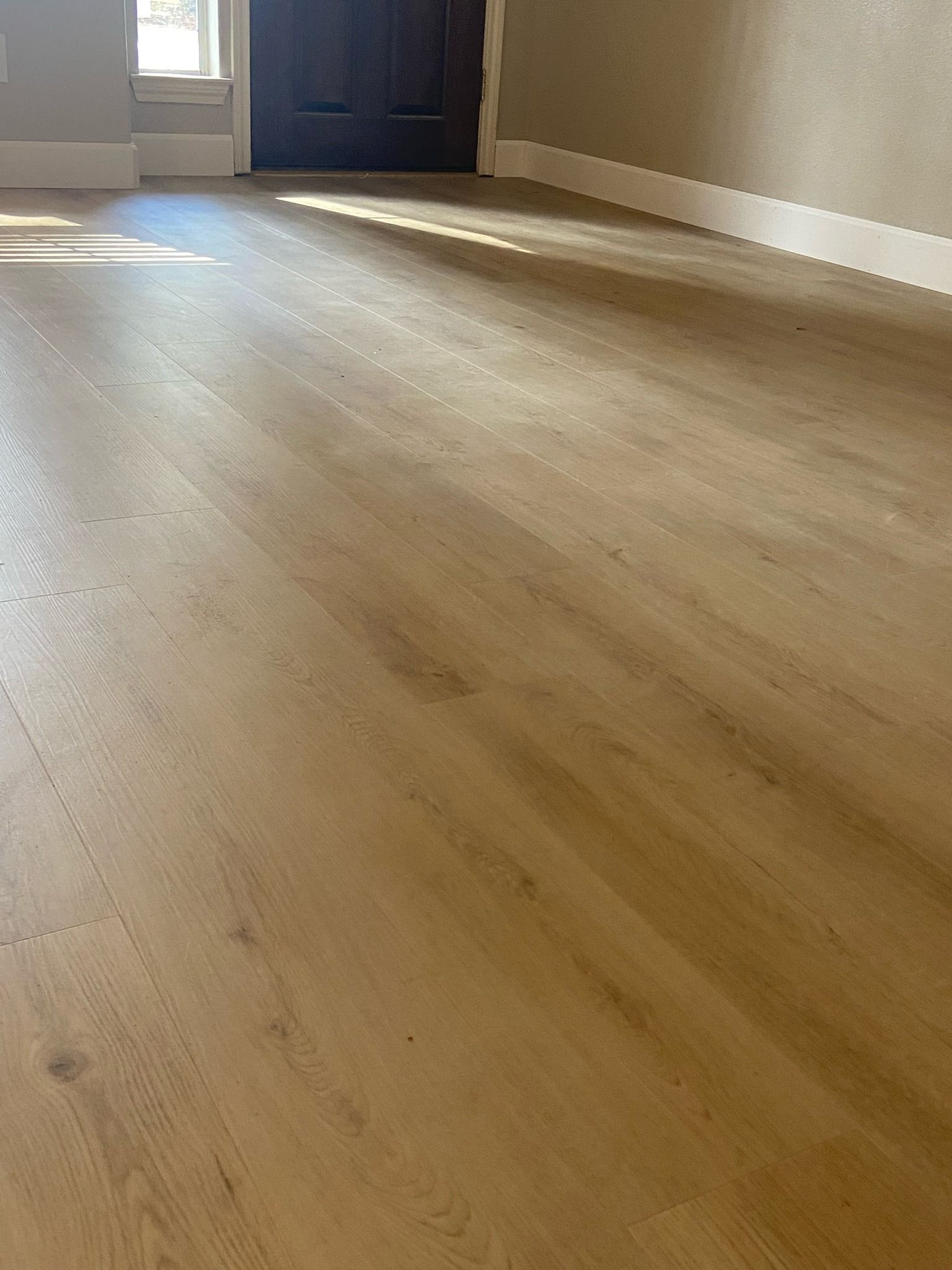
Scratch-Resistant Surfaces at Accessible Price Points
Laminate in Willis for homes needing updated floors without the cost of solid materials
The floating click-lock system used in laminate installations creates a floor that sits atop underlayment without fasteners, allowing the entire surface to expand and contract as a single unit while concealing subfloor imperfections that would telegraph through thinner materials. Willis Flooring Pros installs laminate flooring throughout Willis using products with AC ratings—abrasion criteria established by durability testing—that range from AC3 for moderate residential traffic to AC5 for commercial applications. You're selecting from wood-look planks, stone-replica tiles, and textured finishes that coordinate with existing décor while providing surfaces that resist scratches from furniture legs and pet claws better than traditional hardwood.
Installation involves foam or cork underlayment that dampens sound transmission and cushions footsteps, addressing the hollow acoustics common in floating floor systems. Trim work around perimeters and transitions between rooms conceals the expansion gaps required for seasonal movement, maintaining a finished appearance while allowing the floor to respond to humidity changes without buckling.
Request a quote based on your room dimensions and preferred plank style to begin planning a laminate installation that balances cost and performance.
How Laminate Addresses Wear Without Refinishing
The aluminum oxide wear layer fused to laminate surfaces during manufacturing creates hardness that prevents scratches from penetrating to the photographic layer beneath, unlike wood floors where gouges remove actual material. This construction means surface damage—when it occurs—cannot be sanded out, making the wear layer's initial thickness the primary determinant of product lifespan in high-traffic areas.
You'll notice that laminate maintains its original appearance without the gradual dulling and micro-scratching that develops on hardwood between refinishing cycles, though deep impacts can crack the core material in ways that require plank replacement rather than spot repairs. The fiberboard core beneath the wear layer resists denting from dropped objects better than softer woods like pine, though it remains vulnerable to moisture damage if water sits on seams or edges for extended periods.
Maintenance involves dry or damp mopping without the oil soaps, waxes, or steam cleaners that degrade the wear layer or introduce moisture into seams. Understanding these cleaning limitations prevents the finish dulling and edge swelling that reduce laminate's service life in households where maintenance products are misapplied.
Common Questions About Laminate Performance
Selecting laminate requires understanding how its construction creates different performance characteristics compared to solid materials and other engineered options.
What do AC ratings indicate about laminate durability in residential settings?
AC ratings measure resistance to abrasion, impact, staining, and burn damage through standardized testing, with AC3 floors suitable for all residential applications and AC4-5 products providing the commercial-grade durability needed in entryways and kitchens that see heavy traffic and frequent spills.
How does underlayment improve laminate floor comfort and noise control?
Foam or cork underlayment compresses slightly underfoot, creating a cushioned feel while absorbing impact sounds that would otherwise transmit through the floating floor system to rooms below, making it essential for second-story installations and homes with open floor plans.
Why do laminate floors require expansion gaps even though the material is engineered?
The fiberboard core still responds to humidity changes by expanding and contracting, and perimeter gaps—hidden by baseboards and transition strips—prevent buckling by allowing movement without resistance from walls, cabinets, or other fixed structures.
What causes laminate planks to separate at seams after installation in Willis?
Insufficient acclimation before installation, missing or inadequate expansion gaps, or moisture infiltration from spills and humidity can cause core swelling that stresses locking mechanisms and creates visible separation at plank edges, requiring reinstallation with proper preparation.
How do texture variations affect the realism of wood-look laminate products?
Embossed-in-register textures align surface relief with the printed wood grain pattern beneath, creating tactile authenticity that flat laminates lack, though deeper textures collect dust in grooves and require more frequent cleaning to maintain appearance in high-traffic areas.
Willis Flooring Pros provides laminate installations that balance aesthetic goals with practical performance requirements, helping homeowners in Willis select products that match both traffic patterns and budget constraints. Schedule your consultation to explore options that deliver the appearance of natural materials without associated costs.