
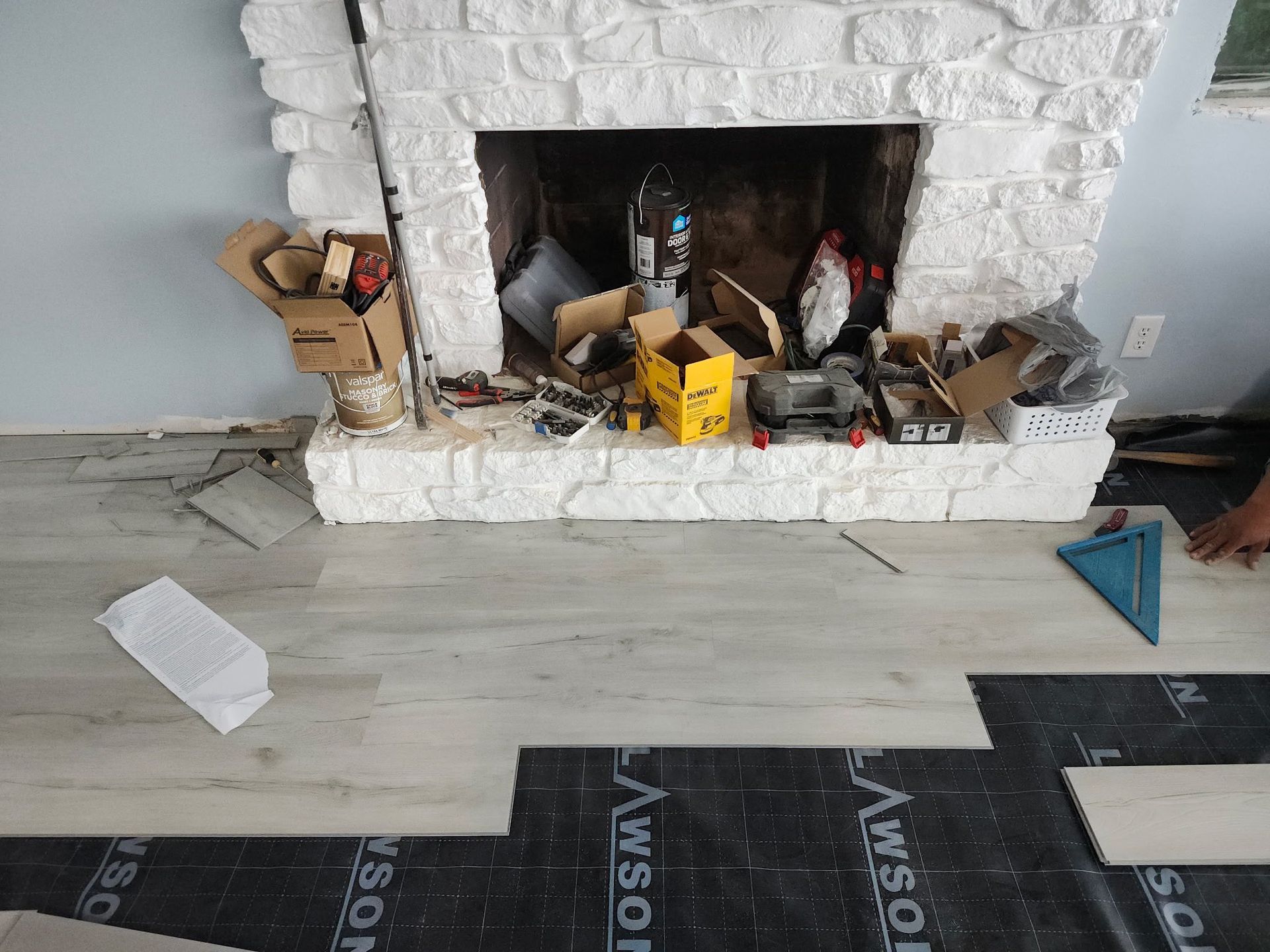
Demolition That Protects What Stays Behind
Floor Removal & Demolition Services in Willis for properties preparing for new flooring installation
Existing flooring often hides subfloor damage, adhesive layers, or underlayment that affects new installation quality. Willis Flooring Pros removes hardwood, tile, carpet, laminate, and vinyl flooring in Willis while preserving subfloor integrity and minimizing dust spread throughout occupied spaces. Controlled demolition isolates work areas and uses dust barriers to prevent contamination in rooms not under construction, which matters in homes where residents remain during remodeling.
Removal techniques vary by material—tile requires careful pry work to avoid cracking the subfloor, carpet pulls away from tack strips without damaging baseboards, and glued-down flooring needs adhesive dissolution before panels lift cleanly. Underlayment and old adhesive are scraped down to bare subfloor because remnants create uneven surfaces that telegraph through new flooring as bumps or hollow spots.
Arrange a demolition consultation to review the current flooring type and discuss debris removal logistics.
How Removal Affects Installation Readiness
Demolition quality determines whether installation proceeds on schedule or gets delayed for subfloor correction. When old flooring is removed, the subfloor beneath is inspected for rot, looseness, and levelness. Dust-controlled methods use HEPA-filtered vacuums during scraping and cutting, which reduces airborne particles that settle on walls, furniture, and HVAC ducts.
Once removal finishes, the subfloor is swept, vacuumed, and checked for protruding fasteners or adhesive ridges that would prevent new flooring from lying flat. You will see a clean, bare surface with no material remnants, loose panels secured with additional screws, and any damaged sections marked for repair before installation begins.
Haul-away services remove all debris from the property the same day demolition completes, so material piles do not obstruct other trades working on concurrent remodel tasks. Fast turnaround matters when flooring installation is scheduled tightly behind demolition to meet move-in or reopening deadlines.
Common Questions About This Service
Homeowners preparing for flooring replacement typically ask about dust control, disposal, and how removal interacts with other remodeling work.
What does dust-controlled demolition involve?
Plastic sheeting seals doorways, and HEPA vacuums connect to power tools during cutting, which captures most dust at the source rather than relying on post-work cleanup to address airborne particles that have already spread.
How is tile removed without damaging the subfloor underneath?
Tile is chipped away from the thin-set adhesive using flat pry bars and chisels angled to avoid gouging the subfloor, though some surface roughness remains and gets smoothed during subfloor prep.
When does underlayment need removal versus staying in place?
Underlayment stays only if it is firmly attached, level, and free of moisture damage; if it shows any soft spots, delamination, or mold, it must be removed and replaced to prevent new flooring from failing.
What happens to baseboards during floor removal?
Baseboards are carefully removed if they will be reinstalled, or demolished if replacement is planned, and any trim that stays is protected with masking to avoid scratches during flooring extraction.
How quickly can demolition be completed for a typical room in Willis?
Most single rooms clear within four to six hours depending on material type and square footage, with debris hauled away the same day to keep the site ready for the next phase.
Willis Flooring Pros coordinates demolition timing with installation schedules to avoid gaps where subfloors sit exposed to moisture or traffic damage. Contact the team to confirm demolition scope and disposal requirements based on your current flooring.