
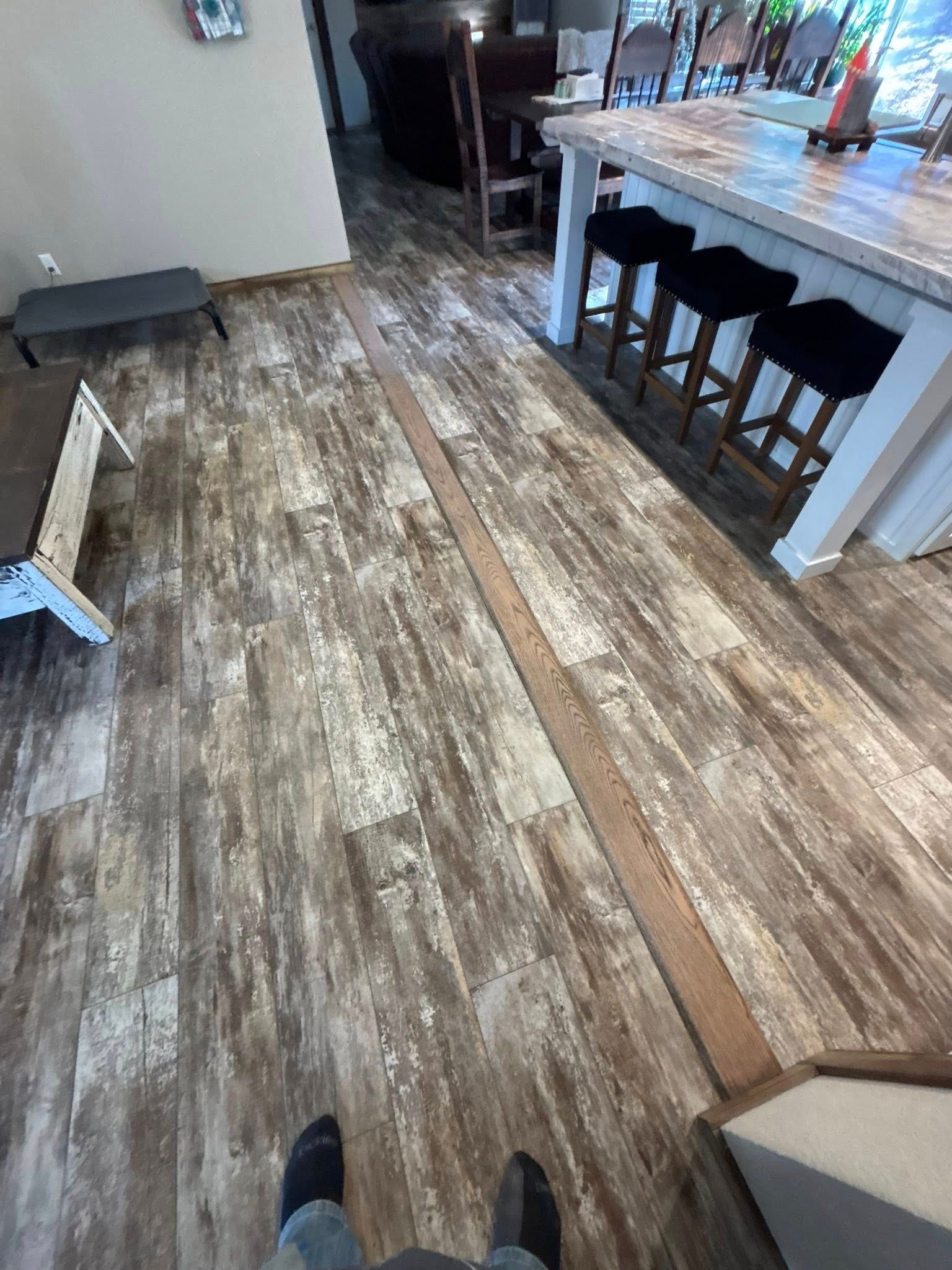
Finishing Work That Completes the Install
Baseboard & Finishing Repair Services in Willis for gaps, damaged trim, and incomplete transitions left after flooring projects
Baseboards hide the expansion gap required around perimeter flooring and create clean visual transitions between walls and floors. When trim is cracked, gaps appear along the floor line, or paint is chipped from previous work, the finished appearance suffers regardless of flooring quality. Willis Flooring Pros removes damaged baseboards, installs replacement trim, repairs molding joints, and seals gaps with caulking in Willis properties where finishing work was skipped or poorly executed during prior installations.
Finishing repair includes correcting height mismatches between rooms, filling gaps where flooring has settled away from walls, and repainting or staining trim to match existing woodwork. Custom trim installation accommodates non-standard wall angles and accounts for flooring thickness changes when different materials meet at doorways.
Arrange a finishing consultation to review trim condition and identify areas where gaps or damage affect appearance.
What Changes After Trim and Transitions Are Corrected
Baseboard replacement eliminates visible gaps along the floor line where dust and debris accumulate, and new trim sits flush against both wall and flooring without the warping or splitting that occurs when old trim is reused after flooring height changes. Caulking seals the joint between baseboard and flooring, which prevents air leaks that reduce energy efficiency and stops moisture from reaching the subfloor during cleaning.
Transition strips installed between rooms eliminate trip hazards and protect flooring edges from chipping where materials meet. Properly secured transitions do not shift or rattle underfoot, and their height is matched to both flooring surfaces so the profile tapers smoothly rather than creating an abrupt edge. Paint touch-ups and finish application make repaired trim indistinguishable from surrounding woodwork.
Gap corrections involve adding backing material or adjusting trim placement so caulking fills voids without sagging or cracking as the building settles. Custom trim work accommodates corners that are not perfectly square, ensuring mitered joints close tightly without visible gaps that widen over time.
What Property Owners Usually Ask
Homeowners preparing for or completing flooring projects often ask about trim reuse, material matching, and how finishing work affects project timelines.
What is the benefit of replacing baseboards instead of reinstalling old trim?
Old baseboards often crack during removal, and nail holes weaken the material, so new trim installs faster, looks cleaner, and lasts longer than patched and repainted salvaged pieces.
How are transition strips chosen for different flooring types?
Transition profiles are selected based on height difference and flooring edge type—T-moldings work for same-height floors, reducers handle height drops, and thresholds seal gaps at exterior doors to prevent water intrusion.
When should caulking be used versus leaving a gap unsealed?
Caulking is applied where gaps are narrow and stable, such as along baseboards; larger gaps caused by structural settling need backing material first, or the caulk will sag and crack within months.
How does trim repair work when existing molding styles are outdated or unavailable?
Custom trim is milled to match profiles, or a complementary style is selected that coordinates with existing woodwork without requiring replacement throughout the home.
What happens if gaps reappear after finishing work is completed in Willis?
Gaps that reopen indicate continued settling or subfloor movement, which must be stabilized before re-sealing; otherwise, the problem recurs and damages the new trim.
Willis Flooring Pros completes finishing work after flooring has acclimated and settled to avoid sealing gaps that shift as materials adjust to indoor humidity. Contact us to schedule trim installation or repair coordinated with your flooring timeline.